


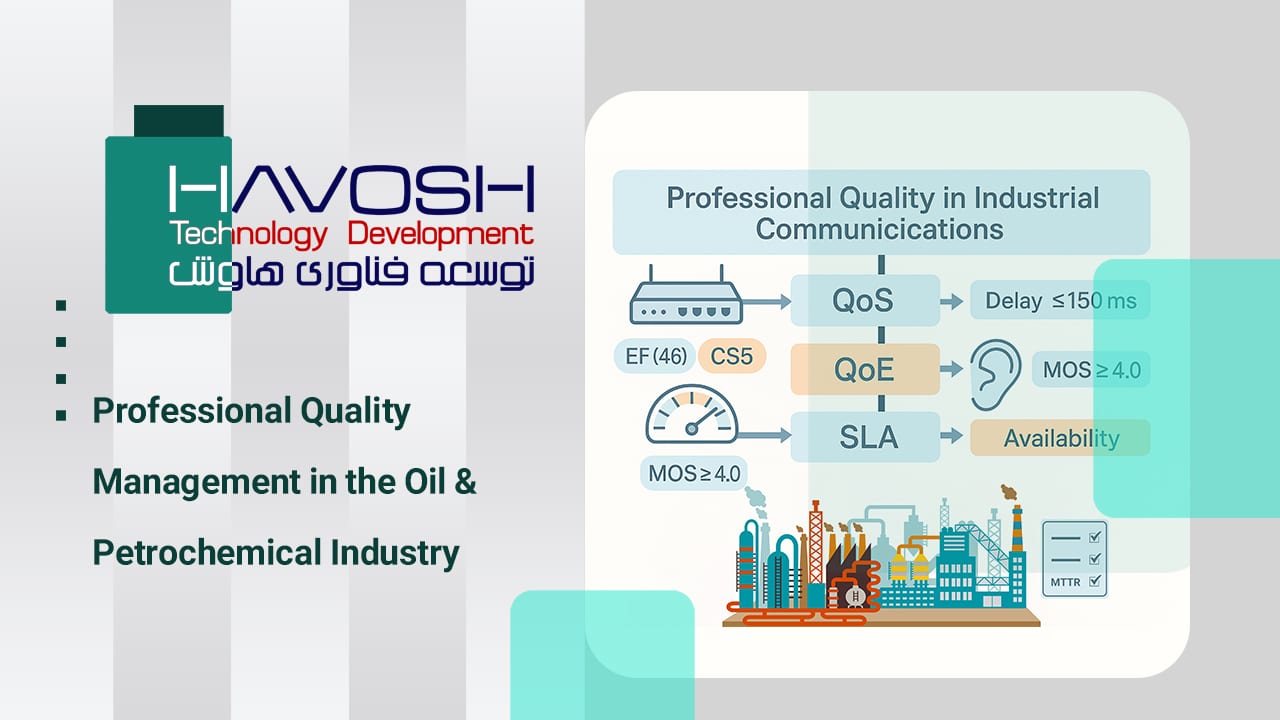

Professional Quality Management in the Oil & Petrochemical Industry
We aim to examine how quality assessment can be elevated from the level of “user or operator perception” to “managerial and measurable indicators.” In emergency paging, it is not enough for the sound to simply be “loud”; it must be “intelligible.” For this purpose, the STI/CIS index, based on the IEC 60268-16 standard, is used. In other words, quality is measured not by the fact that “sound is present,” but by the percentage of message intelligibility. Periodic tests should also be properly recorded and documented.
On the other hand, recording indicators such as MOS, R-Factor, Delay, Jitter, and Packet Loss on the SBC or IP PBX provides a more realistic picture of what a shift manager actually experiences. A professional SLA should also be clearly segmented, measurable, and referenced—ranging from Core communication SLAs to emergency incident SLAs with defined alarm notification times.
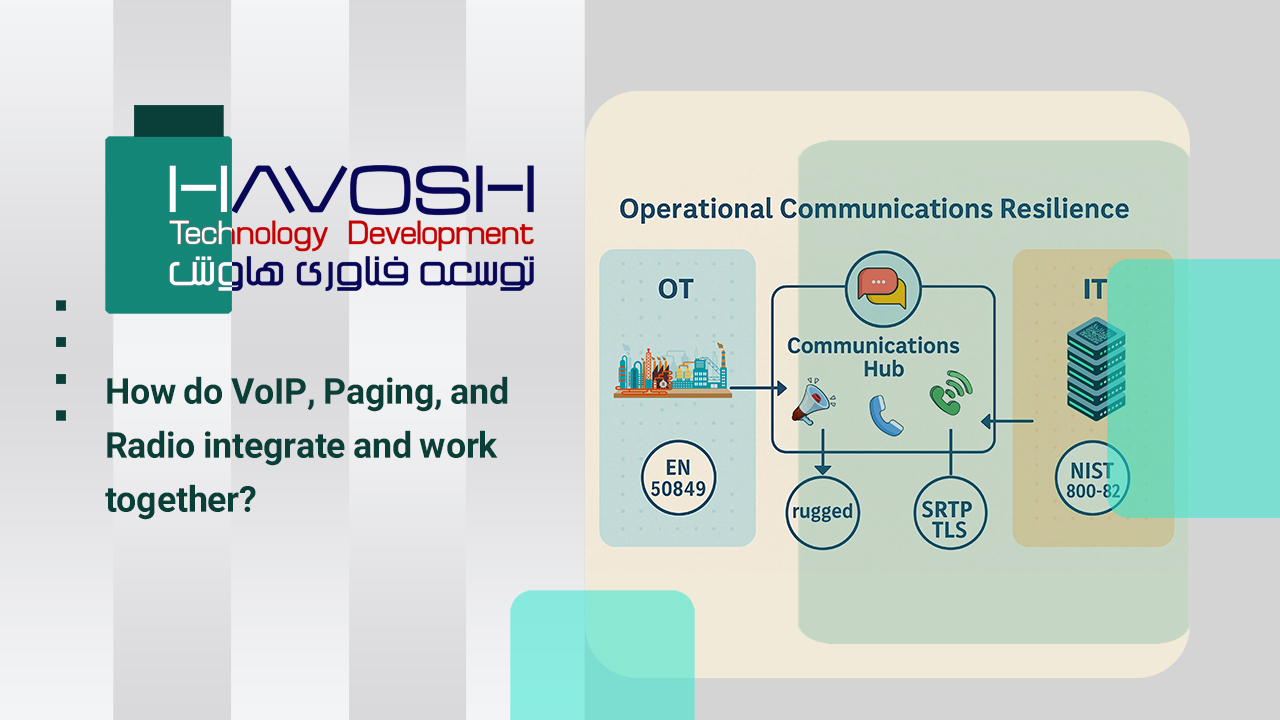

Secure and Resilient Communication Architecture in the Petrochemical Industry
This article provides a framework for designing secure and resilient communication architecture in the petrochemical industry. The main focus is on integrating VoIP, radio, and the Public Address and General Alarm (PAGA) system within a cohesive and robust strategy. It includes:
Intelligent separation of OT and IT networks according to IEC 62443 and NIST 800-82
Ensuring VoIP call quality with QoS and monitoring KPIs
Redundancy and backup paths in multi-site networks
Emergency integration with PAGA according to EN 50849
Security hardening, monitoring, and enforcement of RBAC
Direct benefits: risk reduction, communication reliability, and cyber resilience.